
Greene County Criminal Court Records
A criminal court record is the case-level file kept by the Clerk of Superior Court after a charge becomes a court matter. In Greene County, the clerk maintains records for both Superior Court and District Court criminal cases. The file can contain the charging document, court dates, docket entries, pleas, motions, orders, judgments, sentencing information, probation conditions, payment obligations, and later appeal or compliance events. The charge details themselves are narrower than the full criminal case file, so a closer look at filed charges belongs with Greene County arrest records and court charges.
North Carolina's criminal trial work is split between the two trial divisions. Superior Court handles felony criminal cases and other matters assigned by law. District Court handles misdemeanors, infractions, many traffic criminal matters, first appearances, probable-cause-related proceedings, and magistrate-connected activity. Greene County is listed in Prosecutorial District 9, Superior Court District 9A, and District Court District 9. The District Attorney for Prosecutorial District 9 prosecutes state criminal charges for Greene, Lenoir, and Wayne Counties, while the public court file remains with the clerk.
The North Carolina Chapter 132 index provides statewide public-record context for Greene County criminal court records.
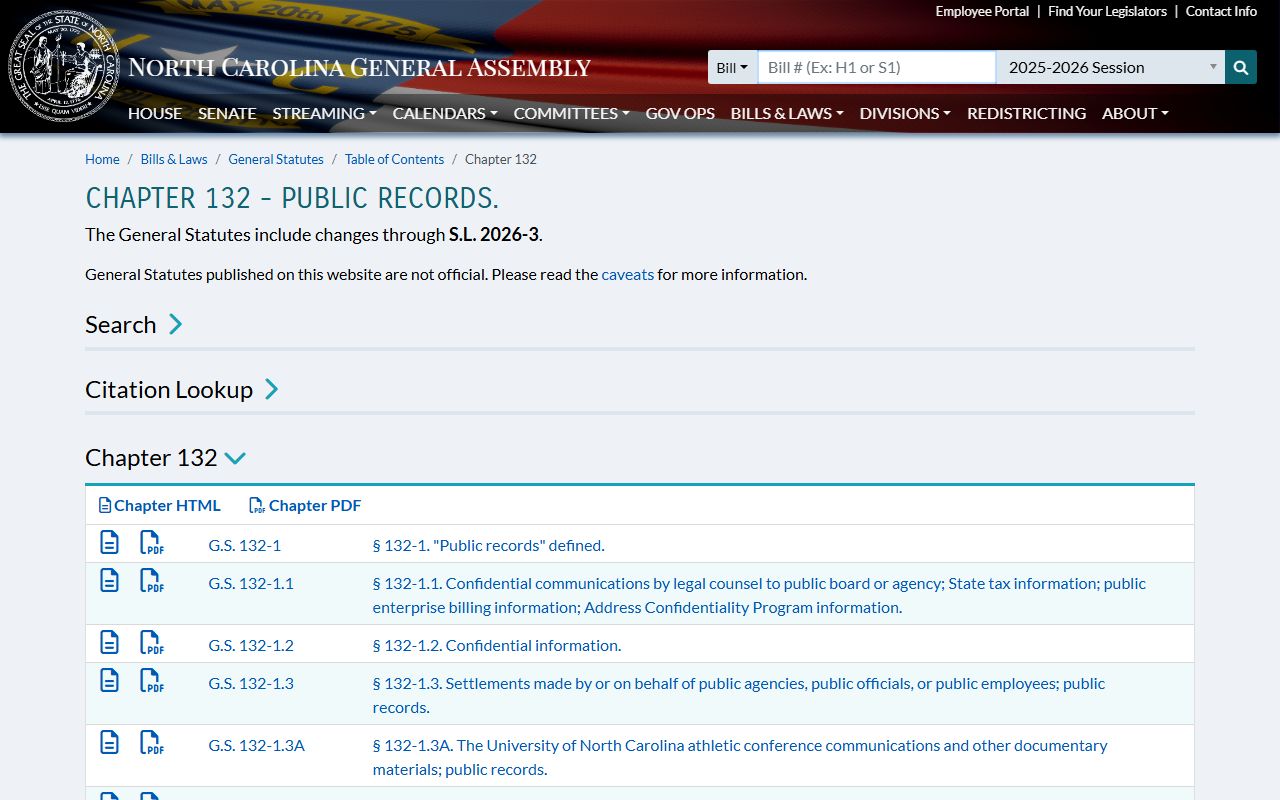
Public-record law supports access, but court-specific statutes and confidentiality rules still control what can be inspected.
Search Greene County Criminal Cases
The main online search path is the North Carolina eCourts Portal. The Judicial Branch describes Portal as a place to search case information, court dates, records or documents where available, and payments. Search by defendant name, case number, attorney, citation, or county where those filters appear. For criminal background-check style searches, official court-record guidance says to use the county clerk's office rather than relying only on Portal.
- Open the eCourts Portal and choose the public case search or hearing search option.
- Search by defendant name, criminal case number, citation number, or attorney name.
- Filter to Greene County and check whether the case is in District Court or Superior Court.
- Open the case result and review charges, docket entries, hearing dates, disposition, and sentence fields.
- Request certified copies or full paper-file review through the Greene County Clerk of Superior Court when needed.
The clerk terminal route is important. The Judicial Branch says criminal case information can be accessed at public self-service terminals in a clerk of court's office in any county, searchable by defendant name, case number, or victim/witness name. For Greene County, the local case file and copy counter are at the courthouse in Snow Hill. Older records, complete files, and certified documents may require in-person or clerk-assisted access.
Greene County Criminal Case Flow
Criminal court records change as the case moves. An arrest or citation may lead to an initial charge, but the filed case can later be amended, reduced, dismissed, indicted, resolved by plea, tried, sentenced, appealed, or expunged. Prosecutors in District Attorney Matthew Delbridge's Prosecutorial District 9 decide how to proceed with many state criminal charges and may negotiate pleas, dismiss charges, amend charges, or present felony matters for indictment. The clerk records the court events and filed documents, not a private narrative of what happened.
Case flow: Charges Filed › First Appearance or Arraignment › Pretrial and Motions › Plea or Trial › Disposition › Sentencing
| Stage | What Happens |
|---|---|
| Charges Filed | A citation, warrant, information, indictment, or other charging document brings the accusation into court. |
| First Appearance / Arraignment | The court addresses the charge, counsel, release terms, and formal response where required. |
| Pretrial / Motions | Parties file motions, set hearings, address discovery, and work through plea or trial preparation. |
| Plea or Trial | The case resolves by plea, dismissal, trial verdict, or other court action. |
| Disposition | The docket records the outcome for each charge or case. |
| Sentencing | The judgment may list custody, probation, costs, restitution, fines, credit, or compliance terms. |
The North Carolina public records statute text gives the broader public-access rule behind criminal-record requests.
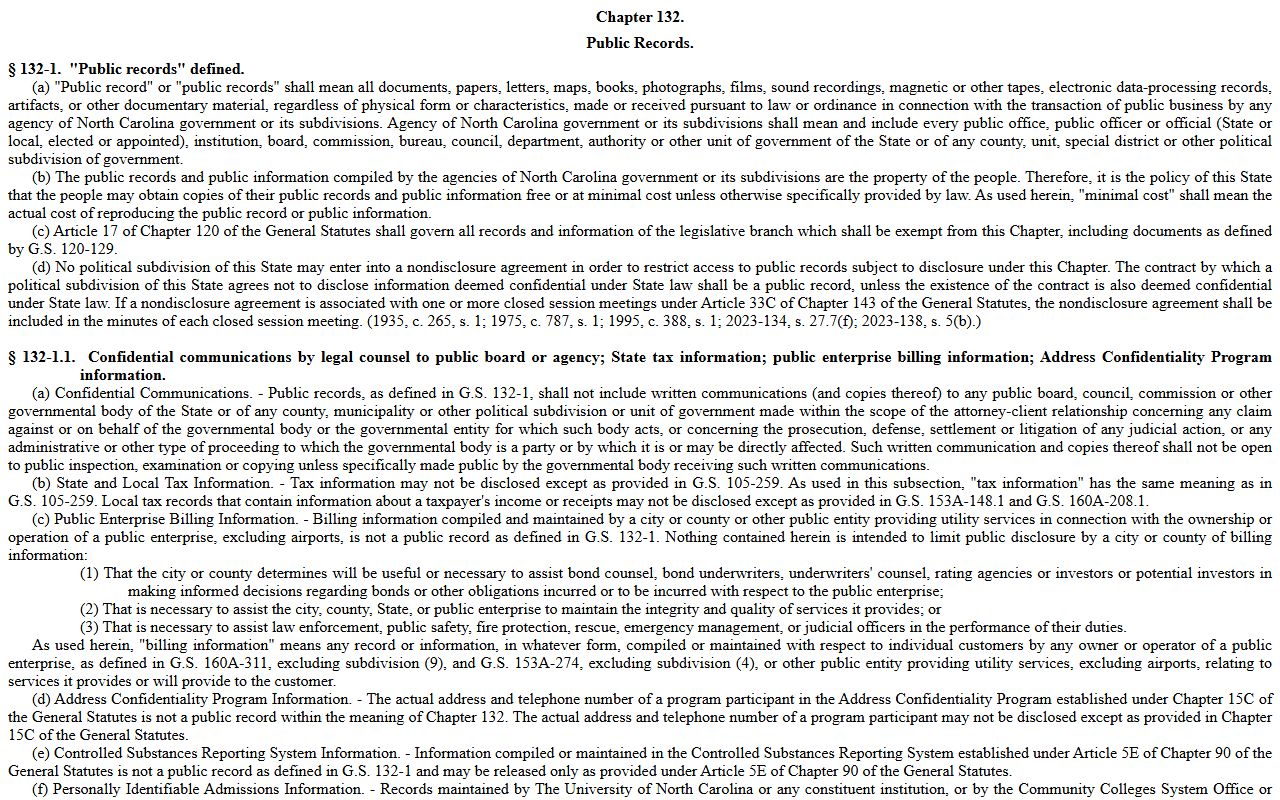
That broad access rule works with court-record statutes and exceptions, not against them.
What Greene County Criminal Records Show
A criminal court record can be read field by field. Start with the case number and court division. Then confirm the defendant, attorney, prosecutor, charge wording, statute or offense description, offense date, agency, citation or warrant number where shown, hearing history, docket entries, pleas, disposition, sentence, and financial obligations. One case may have several charges, and each charge may have its own status or outcome.
| Field | What It Shows |
|---|---|
| Case Number | North Carolina year, case type code, and sequence number, such as CR or CRS for many criminal matters. |
| Defendant | The person charged, with identifying details only as allowed by public access rules. |
| Court Division | District Court for misdemeanors, infractions, traffic criminal matters, and first-stage proceedings, or Superior Court for felonies. |
| Charges | Filed offenses, statute or charge wording, degree or class, offense date, and agency where shown. |
| Bond / Release | Secured bond, unsecured bond, written promise, no bond, or other release conditions if public. |
| Plea | The defendant's formal answer, such as guilty, not guilty, or another plea recognized by the court. |
| Disposition | The outcome, such as guilty, dismissed, not guilty, deferred, closed, or appealed. |
| Sentence | Custody, probation, fines, costs, restitution, credit, and compliance terms in the judgment. |
Financial fields can include criminal court costs, fines, restitution, attorney fees, bond, payment schedule, and compliance status. Judicial Branch current court-cost publications and G.S. 7A-304 provide criminal and infraction cost authority, but exact costs should be checked against current statewide schedules and the clerk because case type and judgment terms matter.
Charges and Convictions Compared
A charge is an accusation filed in court. A conviction is a final criminal outcome based on a guilty plea, guilty verdict, or other conviction entry. Greene County criminal court records may show charges that were amended, reduced, dismissed, or resolved differently from the original arrest or citation. Do not treat every charge line as a conviction. The disposition and judgment fields are the key parts of the record when the issue is the outcome.
| Charge | Conviction | |
|---|---|---|
| Meaning | An accusation that the defendant committed an offense. | A formal guilty outcome by plea, verdict, or judgment. |
| Where It Appears | Charging document, docket, calendar, and case summary. | Disposition, judgment, sentence, and sometimes DMV or correction records. |
| Can Change | Yes, charges may be amended, reduced, added, or dismissed. | Usually final unless appealed, corrected, set aside, or expunged. |
| Record Risk | Public charge history can still appear unless sealed or expunged. | May affect sentencing, probation, licensing, driving status, or collateral consequences. |
Read Dispositions and Sentences
Disposition terms tell what happened to the charge or case. "Guilty" means the charge resulted in a conviction. "Not guilty" means the charge did not result in a conviction after trial or legal finding. "Dismissed" means the court record no longer proceeds on that charge as filed, though the reason and effect can vary. "Dismissed with prejudice" usually means the case cannot be filed again in the same way, while "dismissed without prejudice" can leave room for refiling if permitted. "Appealed" means the case or order moved to a higher court path.
A sentence is the punishment or compliance order after conviction. It can include custody, probation, fines, court costs, restitution, credit for time served, community conditions, treatment terms, and future review dates. Probation records and state prison information may also appear through the North Carolina Department of Adult Correction offender searches, but that system is separate from the Greene County court file.
Note: For criminal background checks, official court guidance points users to the clerk's office rather than portal-only searches.
Sealed and Expunged Criminal Records
Sealed and expunged records are not the same. A sealed record is hidden from normal public view because a court order or statute restricts access. An expunged record is removed from ordinary public record checks after the court grants an expunction order. Greene County users should start expunction questions with the Clerk of Superior Court and Judicial Branch expunction resources, not the Sheriff's Office or jail, because expunction is a court process tied to the case file.
| Sealed | Expunged | |
|---|---|---|
| Visibility | Hidden from public access by court order or statute. | Cleared from normal public record checks after expunction is granted. |
| Common Basis | Juvenile, adoption, confidential, safety-sensitive, or court-ordered restriction. | Statutory eligibility after dismissal, not guilty finding, certain convictions, or other grounds. |
| Key Statutes | Chapter 7B and adoption confidentiality rules for some categories. | G.S. 15A-145.5 and G.S. 15A-153 for certain nonviolent cases and expunction effect. |
| Practical Step | Ask the clerk whether public inspection is allowed. | File or review the expunction petition through the court file. |
The criminal-record source for G.S. 15A-145.5 supports the expunction eligibility discussion.
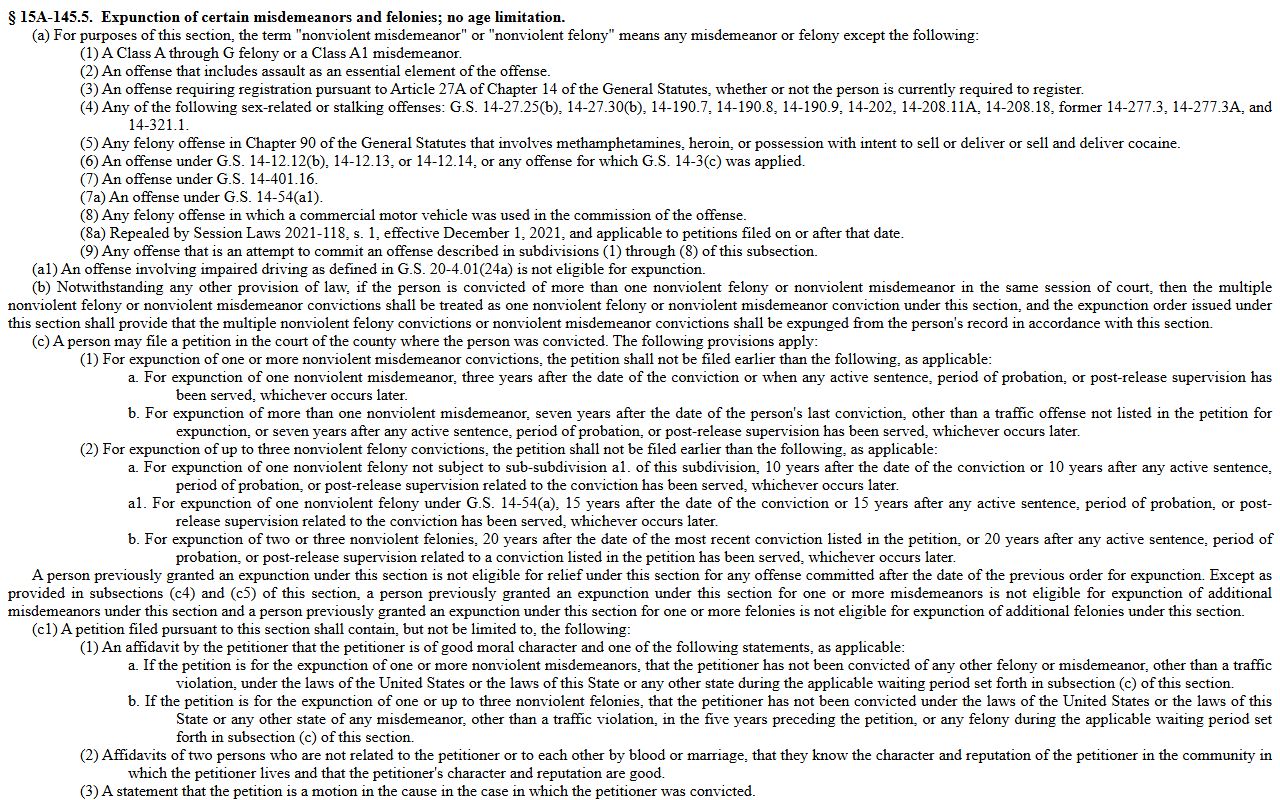
Eligibility is fact-specific, so the statute should be read with the actual Greene County disposition and any prior record.
Public Access to Greene Criminal Records
Public access rests on two linked rules. Chapter 132 broadly defines public records and favors access unless law provides an exception. G.S. 7A-109 requires clerks to keep records, dockets, files, and indexes, and it makes those records open to public inspection during regular office hours unless another law prohibits it. That means adult criminal case information is often public, but the public route still runs through official systems, public terminals, clerk files, and copy procedures.
Key Statutes:
G.S. 132-1 defines public records broadly and supports public inspection unless a law restricts access.
G.S. 7A-109 requires clerk-maintained records, files, dockets, and indexes and allows inspection during regular office hours unless prohibited.
Restrictions remain important. Juvenile delinquency records are governed by Chapter 7B. Abuse, neglect, and dependency files are withheld from public inspection except by court order or statute. Adoption records are sealed. Mental-health and commitment-related records are not broadly public. Personal identifiers, medical data, protected addresses, and minor information may be redacted. If a criminal file is sealed or expunged, public search tools may not show it.
The source for G.S. 15A-153 supports the public effect of expunction orders.
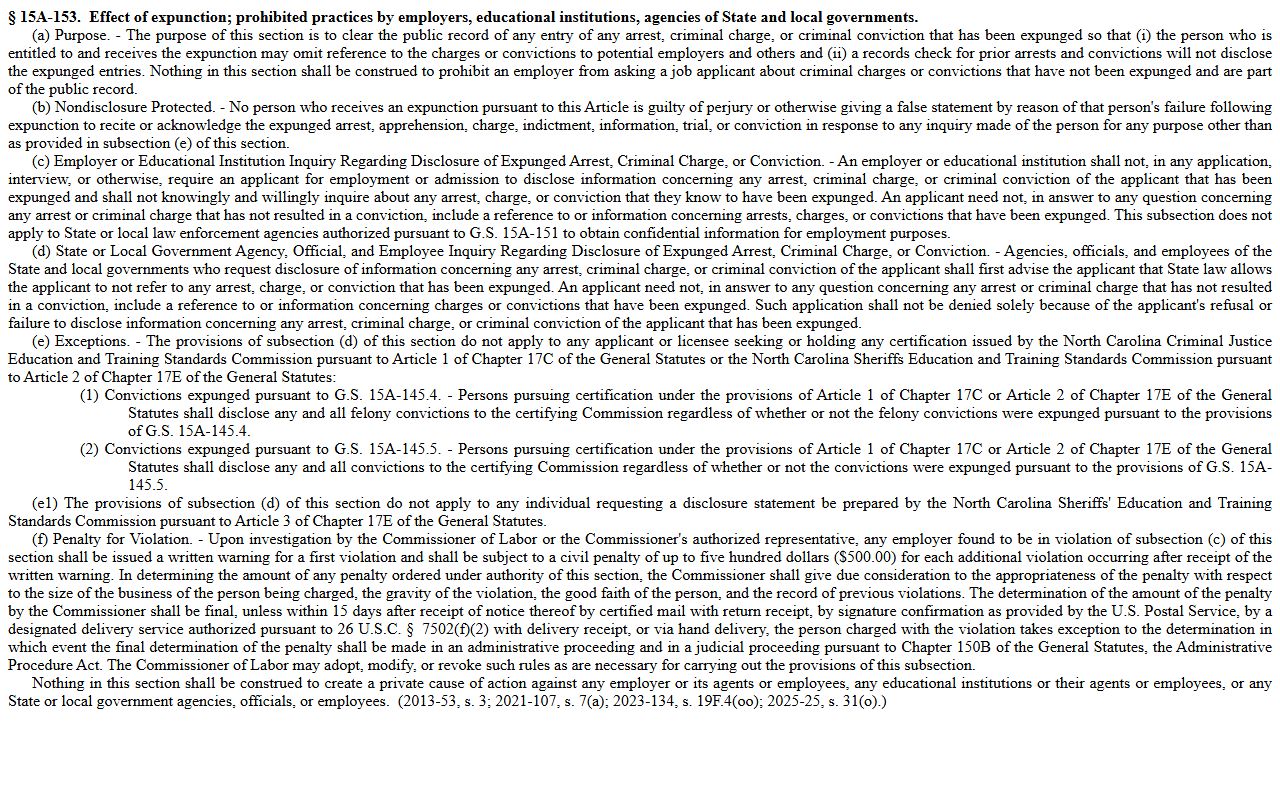
That effect matters because a public lookup may no longer disclose an arrest, charge, or conviction entry after relief is granted.
Greene County Criminal Case Offices
The District Attorney prosecutes state criminal charges; the office does not keep the public court file and does not provide defense advice. Prosecutorial District 9 serves Greene, Lenoir, and Wayne Counties. The NC District Attorneys page identifies District Attorney Matthew Delbridge and lists the district office at PO Box 175, Goldsboro, NC 27533, phone (919) 722-6200, and fax (919) 722-6181. The Greene County court contact directory separately lists a District Attorney contact at (252) 520-5400.
No Greene County-specific public defender office page was located in the official IDS directory. North Carolina Indigent Defense Services maintains statewide defender directories and resources. A defendant who cannot afford counsel generally requests court-appointed counsel through the court process, not by contacting the District Attorney. The court file can show attorney information where public, but legal representation questions should be handled through official court channels or counsel.
The Prosecutorial District 9 District Attorney page documents the state prosecutor for Greene County criminal cases.
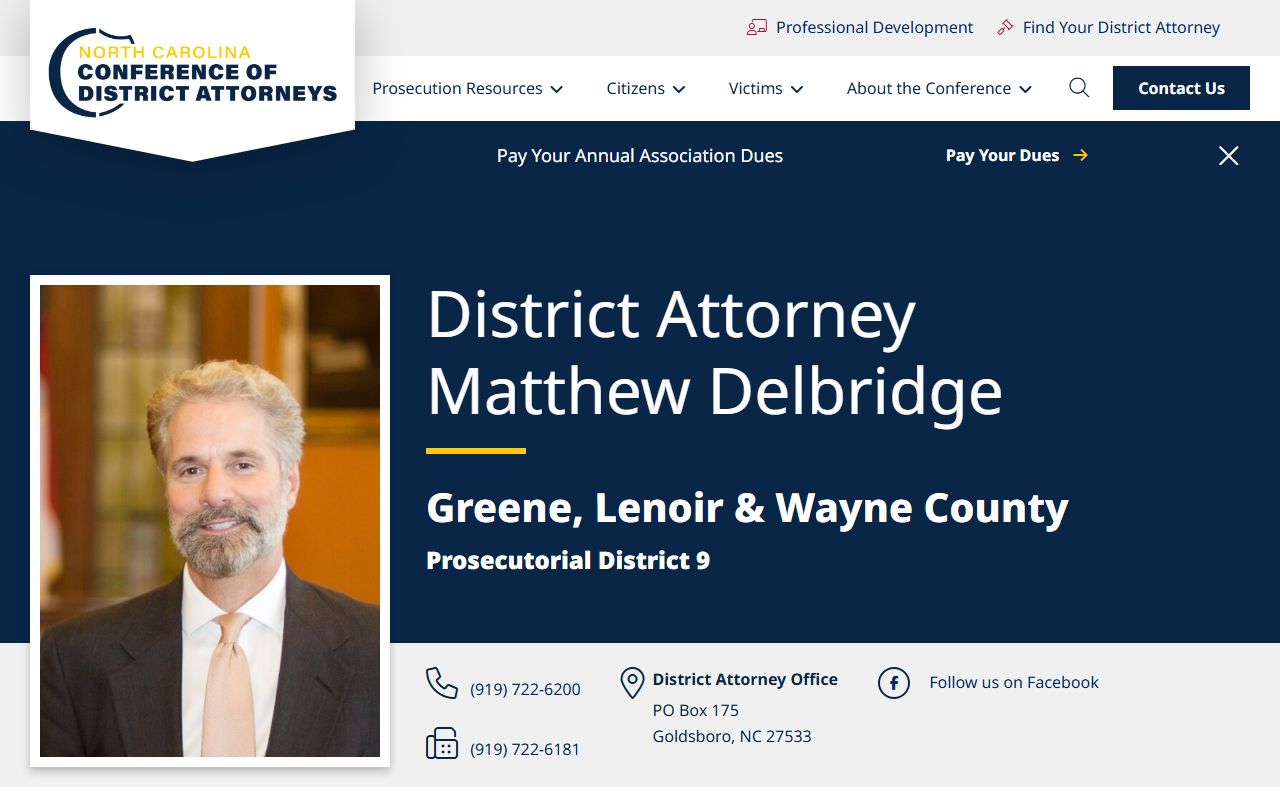
It clarifies who prosecutes state charges while leaving court-file custody with the clerk.
The North Carolina Indigent Defense Services defender directory provides the statewide appointed-counsel context.
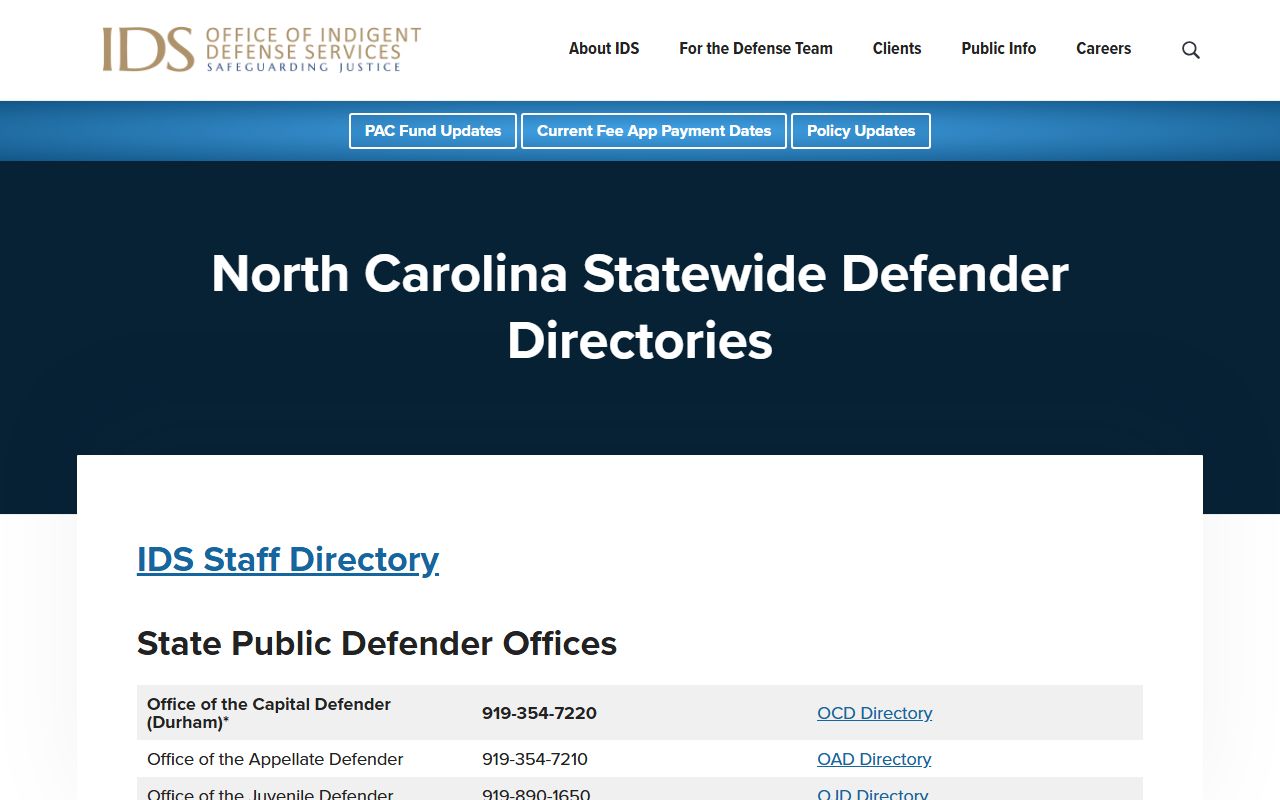
That source supports the distinction between public case lookup and representation for defendants who may need appointed counsel.
Request Greene Criminal Case Copies
For certified copies, older files, complete paper records, or public-terminal searches, use the Greene County Clerk of Superior Court. The courthouse is at 301 N Greene St., Snow Hill, NC 28580, with the mailing address PO Box 675, Snow Hill, NC 28580. The main phone is (252) 747-6200 and fax is (252) 747-6201. Clerk counter hours are listed as 8:30 a.m. to 4:15 p.m., while general courthouse hours are Monday through Friday, 8:00 a.m. to 5:00 p.m.
Greene County Clerk of Superior Court
301 N Greene St.
Snow Hill, NC 28580
(252) 747-6200
Clerk counter: 8:30 a.m. to 4:15 p.m.